
Making a list of the world’s top destinations for any given year serves as a reminder of travel’s most exquisite paradox: that our globe can both feel tremendously wide and intimately little. There are countless places to visit in the world, which is filled with more wonders than you could experience in a lifetime and is becoming more interconnected. This is precisely what makes compiling this list both a task and a wonderful pleasure.
Here’s your specially curated travel bucket list for 2026:
1. Costa Rica
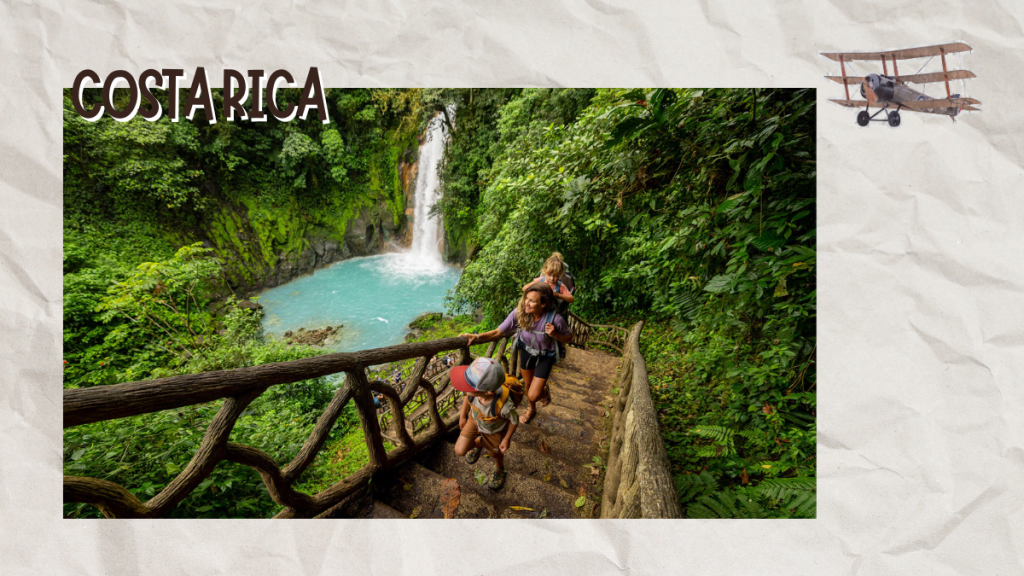
As more individuals consider ways to protect the environment, ecotourism soars. Costa Rica is the epitome of an eco-friendly travel destination since it enforces stringent regulations to save its beautiful wildlife. In 2026, you should not miss the nation’s stunning waterfalls, thick jungles where you may see sloths and toucans, and sandy beaches. Scream “pura vida,” or pure life, as you enjoy the sun in Manuel Antonio National Park or as time slows down in Puerto Viejo. To put it briefly, Costa Rica is a nature lover’s paradise.
2. Greenland
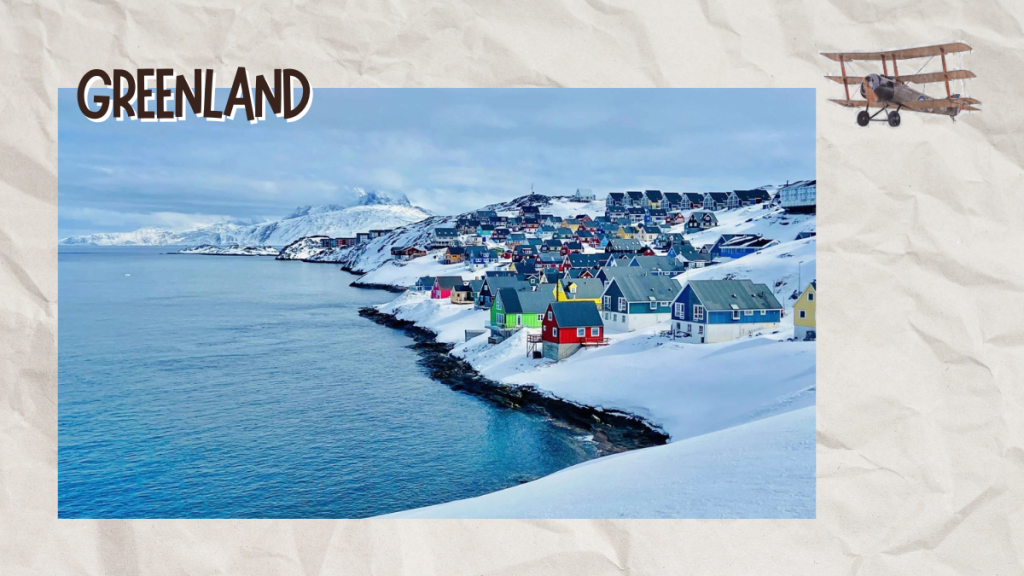
The largest island in the world, Greenland, is located in the North Atlantic Ocean. Greenland (Kalaallit Nunaat) is renowned for its enormous glaciers and wide tundra. The home-rule administration of Greenland is in charge of most internal matters, even though the island is still a part of the Kingdom of Denmark. The majority of the Greenlandic people are Inuit, who refer to themselves as Kalaallit (West Greenlanders), Inugguit (from the Thule province), or Iit (East Greenlanders), depending on where they are from. They refer to their homeland as the “Country of the Greenlanders,” or Kalaallit Nunaat. Nuuk (Godthåb) is the capital of Greenland.
3. Kyrgyzstan
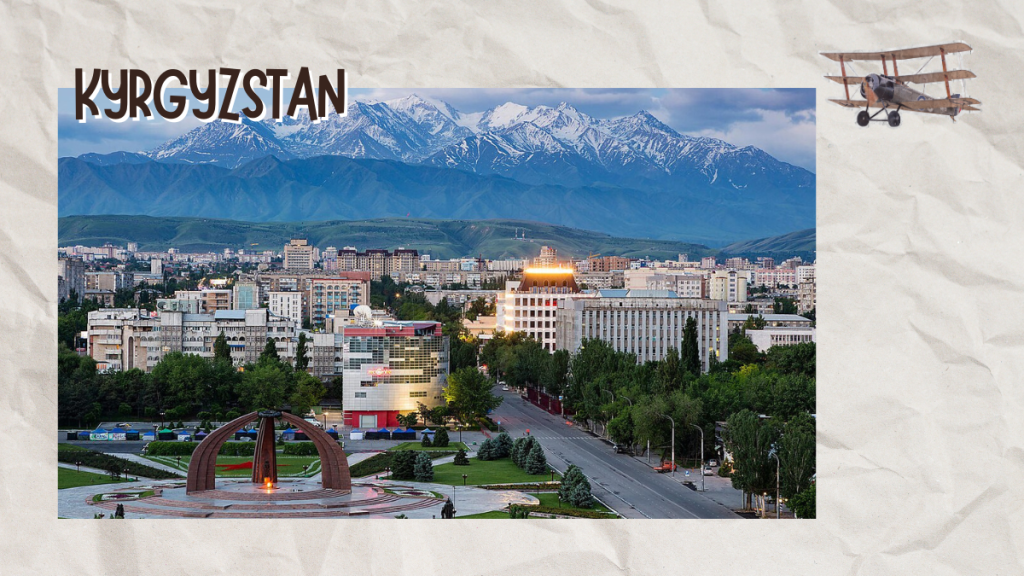
Situated in the Tian Shan and Pamir mountain ranges, Kyrgyzstan, formally known as the Kyrgyz Republic, is a landlocked nation in Central Asia. It shares borders with China to the east and southeast, Tajikistan to the south, Uzbekistan to the west, and Kazakhstan to the north. The largest city and capital is Bishkek. The bulk of the nation’s more than 7 million citizens are ethnic Kyrgyz, with a sizable minority of Uzbeks and Russians following.
4. Mongolia
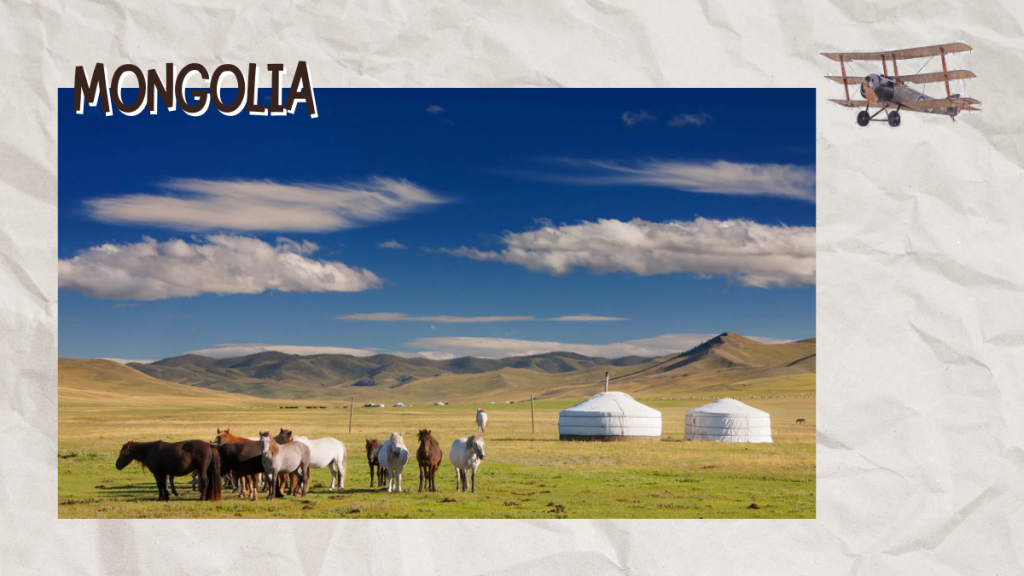
East Asia’s landlocked nation is Mongolia. Covering an area of 1,564,116 square kilometers (603,909 square miles), it is the second-largest landlocked nation after Kazakhstan and the largest landlocked nation without an inland sea border. It is bordered to the north by Russia and to the south and southeast by China. It is the most sparsely inhabited sovereign state in the world, with a population of 3.5 million. The country, which makes up a sizable chunk of the Mongolian Plateau, is known for its green steppe, mountains to the north and west, and the Gobi Desert to the south. About half of the nation’s population lives in Ulaanbaatar, the capital and largest city.
5. New Zealand
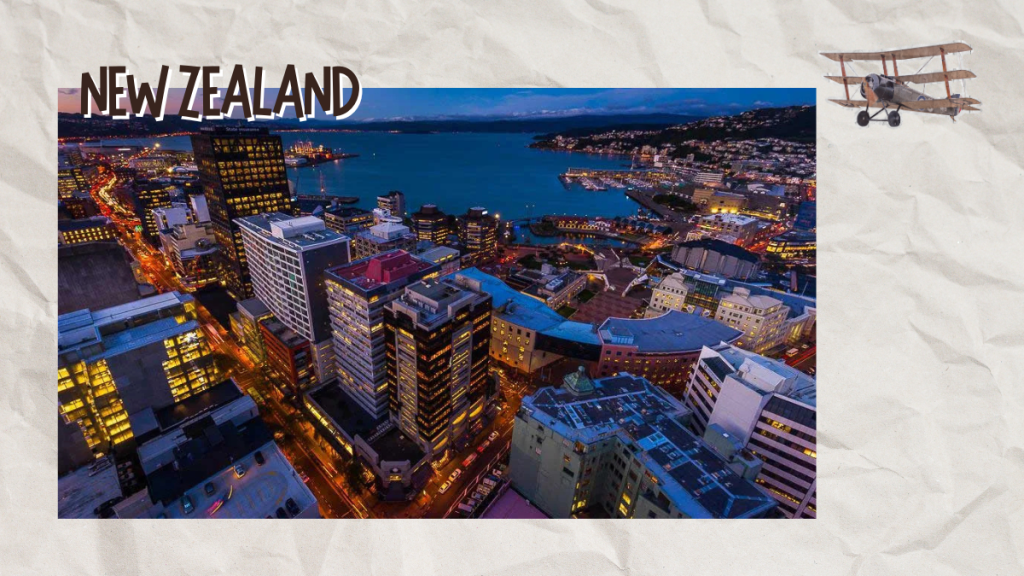
The island nation of New Zealand is located in the southwest Pacific Ocean. It is made up of more than 600 smaller islands as well as two major landmasses, the North Island (Te Ika-a-Māui) and the South Island (Te Waipounamu). Situated east of Australia, across the Tasman Sea, and south of the islands of New Caledonia, Fiji, and Tonga, it is the sixth-largest island nation by area. Tectonic uplift and volcanic eruptions are largely responsible for the country’s diverse topography and high mountain peaks, such as the Southern Alps (Kā Tiritiri o te Moana). Auckland is the most populated city in New Zealand, but Wellington serves as its capital.
6. Rio de Janeiro, Brazil
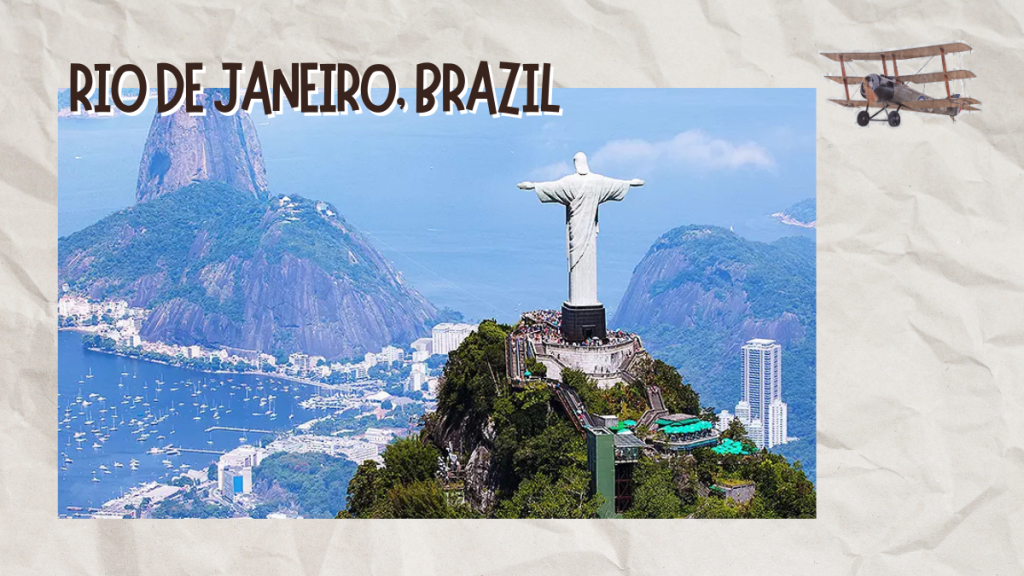
The capital of the state of Rio de Janeiro is Rio de Janeiro, or simply Rio. It is the sixth most populous city in the Americas and the second most populous city in Brazil, behind São Paulo. One of the most popular tourist destinations in the Southern Hemisphere, Rio de Janeiro is renowned for its beaches, including Barra da Tijuca, Copacabana, Ipanema, and Leblon, as well as its natural surroundings, carnival, samba, and bossa nova. Apart from the beaches, other notable locations include the statue of Christ the Redeemer atop Corcovado Mountain, which is considered one of the New Seven Wonders of the World; Sugarloaf Mountain with its cable car; the Sambódromo, a parade avenue lined with grandstands that is used during Carnival; and Maracanã Stadium, one of the biggest football stadiums in the world.
Rio de Janeiro hosted the 2016 Summer Olympics and Paralympics, making it the third time the Olympics were held in a Southern Hemisphere city and the first South American and Portuguese-speaking city to do so. The 1950 and 2014 FIFA World Cups, the 2013 FIFA Confederations Cup, and the XV Pan American Games were all held at the Maracanã Stadium. The city will host the FIFA Women’s World Cup in 2027 after hosting the G20 conference in 2024.
7. Peru
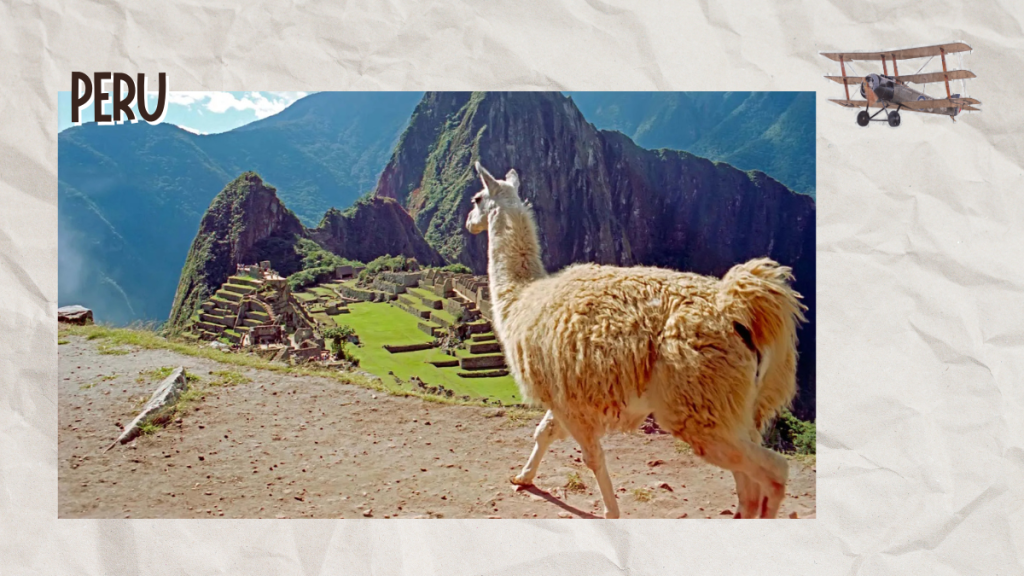
Peru is a nation in western South America, formally known as the Republic of Peru. It shares borders with Ecuador and Colombia to the north, Brazil to the east, Bolivia to the southeast, Chile to the south, and the Pacific Ocean to the south and west. With ecosystems ranging from the tropical Amazon basin rainforest in the east, with the Amazon River, to the drier plains of the Pacific coastline region in the west, to the peaks of the Andes mountains stretching from the country’s north to its southeast, Peru is a megadiverse nation. Lima is the capital and largest city of Peru, which has a population of more than 32 million. Peru is the third largest country in South America and the 19th largest in the world at 1,285,216 km² (496,225 sq mi).
8. Torres del Paine National Park, Chile
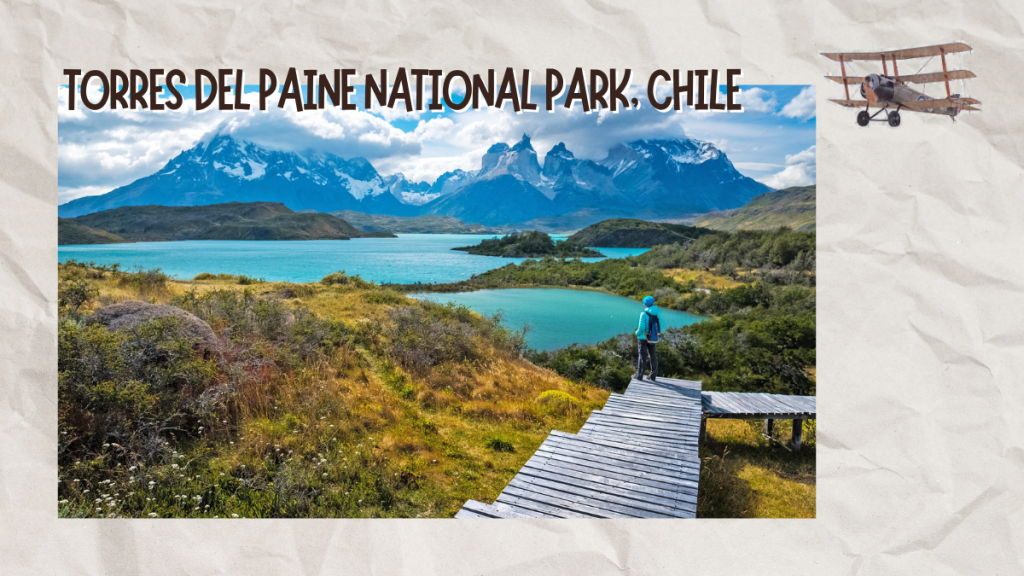
In southern Chilean Patagonia, there are mountains, glaciers, lakes, and rivers that make up Torres del Paine National Park. The focal point of the park is the Cordillera del Paine. It is situated in a region where the Patagonian Steppes and the Magallanesian subpolar woods meet. The park is situated 312 kilometers (194 miles) north of Punta Arenas and 112 kilometers (70 miles) north of Puerto Natales. The park shares borders with the Los Glaciares National Park in Argentina to the north and the Bernardo O’Higgins National Park to the west. Pronounced PIE-neh, Paine means “blue” in the local Tehuelche (Aonikenk) language. In 1959, it was declared a National Park.
9. The Dolomites, Italy
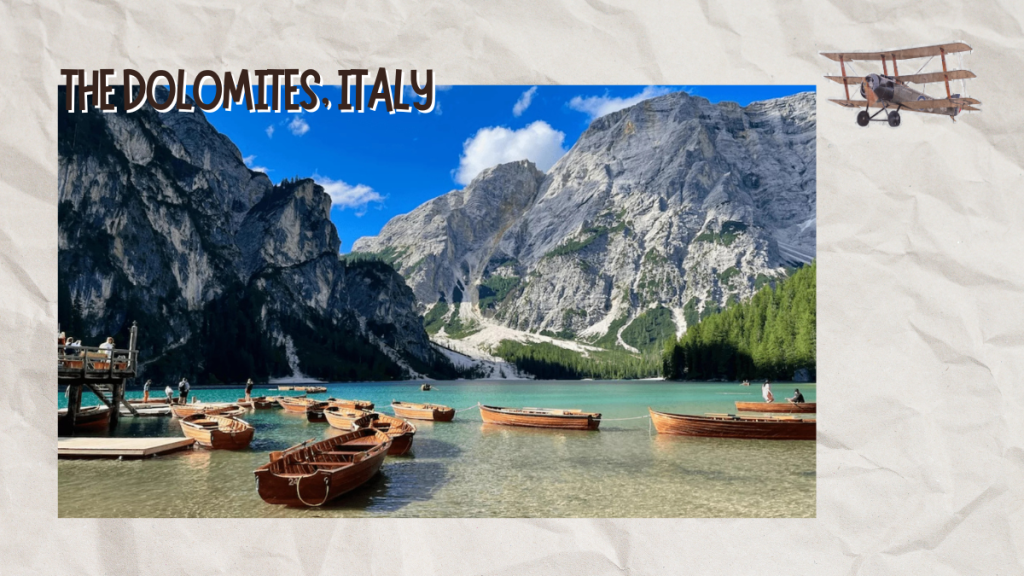
The Dolomites are a mountain range in northeastern Italy that is often referred to as the Dolomite Mountains, Dolomite Alps, or Dolomitic Alps. They stretch from the River Adige in the west to the Piave Valley (Pieve di Cadore) in the east and are a part of the Southern Limestone Alps. The Puster Valley and the Sugana Valley (Italian: Valsugana) delineate the northern and southern boundaries. The Dolomites, which are shared by the provinces of Belluno, Vicenza, Verona, Trentino, South Tyrol, Udine, and Pordenone, are located in the regions of Veneto, Trentino-Alto Adige/Sõtirol, and Friuli-Venezia Giulia. The Dolomiti d’Oltrepiave mountain range is located along the Piave River to the east, while the Dolomiti di Brenta (Western Dolomites) mountain range is located far over the Adige River to the west. Between the provinces of Trentino, Verona, and Vicenza is a smaller group known as Piccole Dolomiti (Little Dolomites).
The Dolomites are home to numerous regional parks, including the Dolomiti Bellunesi National Park. The Dolomites were designated as a UNESCO World Heritage Site on June 26, 2009. The Dolomites are also home to the Adamello-Brenta UNESCO Global Geopark. Predazzo, Fiemme Valley is home to the Geological Museum of the Dolomites, also known as the Museo Geologico delle Dolomiti in Italian.
10. The Himalayas
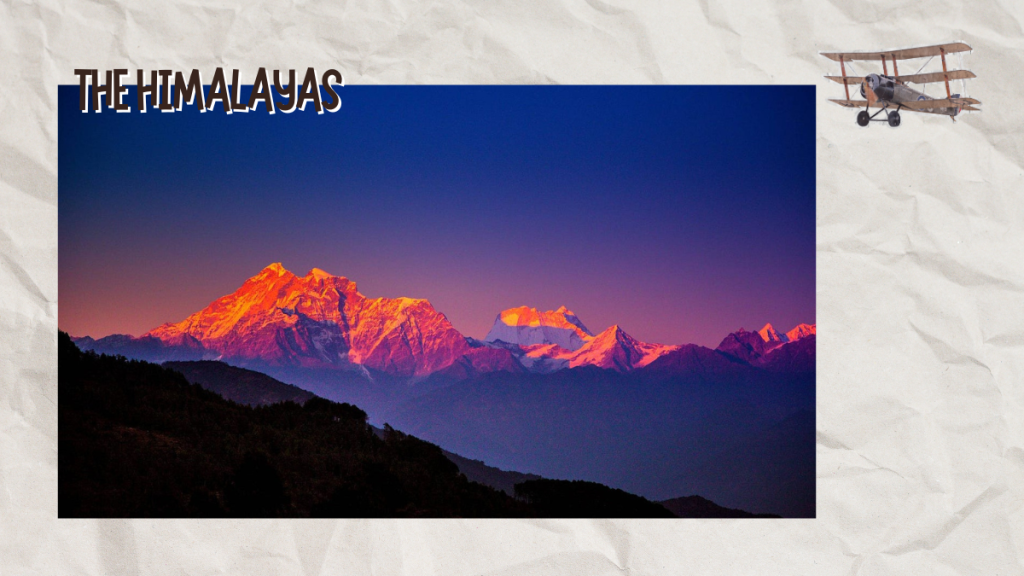
A mountain range in Asia known as the Himalayas divides the Tibetan Plateau from the plains of the Indian subcontinent. Some of the tallest peaks on Earth, including Mount Everest, are located in this range. The Himalayas contain more than 100 peaks that are higher than 7,200 meters (23,600 feet) above sea level.
Nepal, India, China, Bhutan, Pakistan, and Afghanistan are the six nations whose territories the Himalayas border or cross. China, India, and Pakistan are at odds over the region’s sovereignty in the Kashmir area. The Tibetan Plateau borders the Himalayan range on the north, the Indo-Gangetic Plain borders it on the south, and the Karakoram and Hindu Kush mountains border it on the northwest.
About 600 million people live in the combined drainage basin of some of the world’s biggest rivers, including the Indus, Ganges, and Tsangpo-Brahmaputra. Of these, 53 million reside in the Himalayas. Tibetan and South Asian cultures have been greatly influenced by the Himalayas. Buddhism and Hinduism both regard many Himalayan peaks as sacred. Climbers are not permitted to reach the summits of numerous mountains, including Kangchenjunga (from the Indian side), Gangkhar Puensum, Machapuchare, Nanda Devi, and Kailash in the Tibetan Transhimalaya.
11. Yellowstone National Park, USA
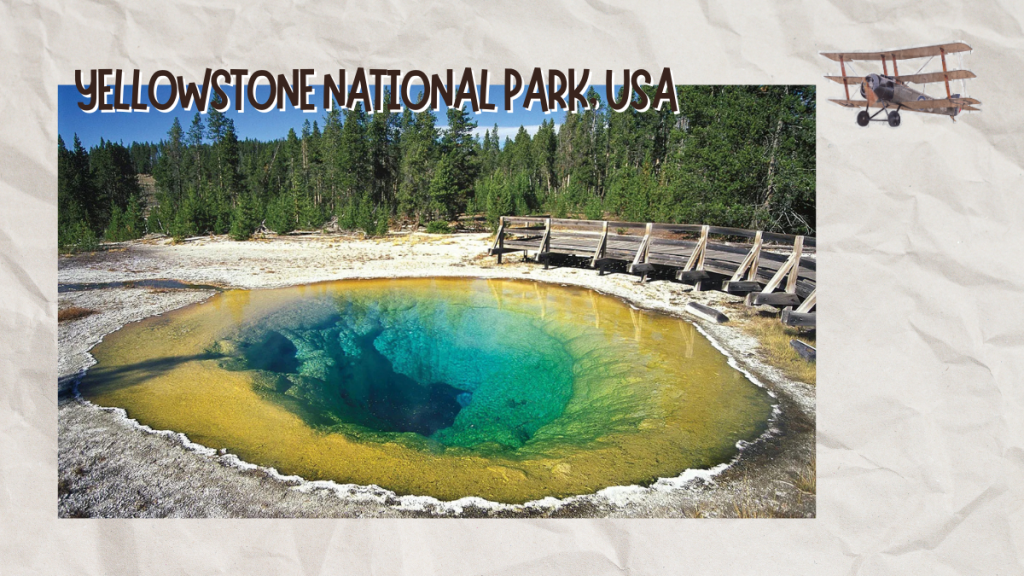
Yellowstone National Park is a national park in the United States that is situated in Wyoming’s northwest corner and has tiny areas that extend into Montana and Idaho. President Ulysses S. Grant signed the Yellowstone National Park Protection Act into law on March 1, 1872, after the 42nd U.S. Congress enacted it. In addition to being the first national park in the United States, Yellowstone is generally regarded as the world’s first national park. The park is well-known for its fauna as well as its numerous geothermal phenomena, the most well-known of which is the Old Faithful geyser. Although it encompasses a variety of biomes, the subalpine forest is the most prevalent. It belongs to the ecoregion of the South Central Rockies forests.
12. Slovenia
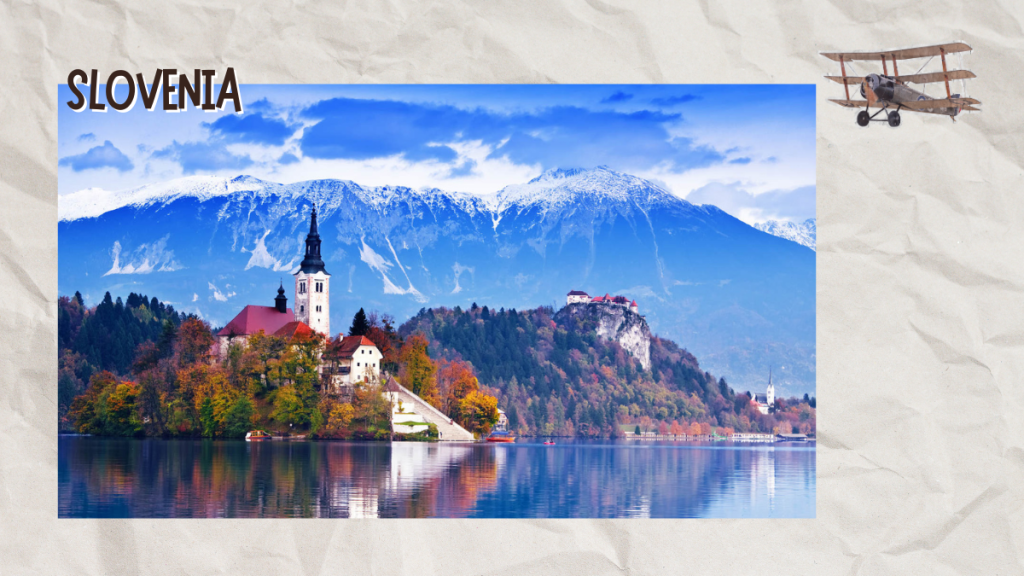
Slovenia is a Central European nation, formerly known as the Republic of Slovenia [b]. Slovenia was established in 1991 and shares boundaries with Italy to the west, Austria to the north, Hungary to the northeast, and Croatia to the south and southeast. Its southwest boundary is a 46.6-kilometer stretch of Adriatic coastline. Slovenia spans 20,271 square kilometers (7,827 square miles), is primarily mountainous and forested, and is home to about 2.1 million people. The official language is Slovene. Except for the Julian Alps and the Slovene Littoral, Slovenia enjoys a mostly moderate continental climate. Slovenia’s largest city and capital, Ljubljana, is located close to the country’s center. Maribor, Ptuj, Kranj, Celje, and Koper are some of the other bigger cities.
Also Read: 5 Most Stylish Cities In Europe
Slovenia’s area has been a part of numerous states, such as the Habsburg Empire, the Byzantine Empire, the Carolingian Empire, the Holy Roman Empire, the Kingdom of Hungary, the Republic of Venice, and the Illyrian Provinces of Napoleon’s First French Empire. In December 1918, the Kingdom of Serbs, Croats, and Slovenes was established; it changed its name to Yugoslavia in 1929. Slovenia was one of the six republics that formed the socialist federation of Yugoslavia in 1946, following World War II. Slovenia became a sovereign state in June 1991 after declaring its independence from Yugoslavia.
Ready to start planning your 2026 bucket list adventure?
Travelers who are passionate about discovery choose these locations, so wherever you go, you can count on an amazing experience. Make 2026 your most inspired year yet by starting to cross things off your list of destinations.
FAQs
Q1. What are trending destinations for 2026?
Ans: Trending Places in 2026 Rankings:
- Indian Himalayas, India.
- Killarney, Ireland.
- Las Vegas, Nevada, US.
- Marrakech, Morocco.
- Marbella, Spain.
- Okinawa Islands, Japan.
- Panama City, Panama.
- Papagayo Peninsula, Costa Rica.
Q2. Which city will be the greatest in the world in 2026?
Ans: According to a survey released by Resonance Consultancy in collaboration with Ipsos, London is still the greatest city in the world for the eleventh consecutive year.
Q3. Where is Gen Z traveling to?
Ans: This fall, Gen Z travel searches are up 26 percent, with many travelers booking foreign vacations across all continents. One location has become the most sought-after destination as young tourists jet set around the globe. Paris is the most popular fall travel destination for Generation Z, according to research.
Q4. Which nation offers the most affordable travel options?
Ans: The least expensive places to travel vary depending on where you’re from, but Nepal, Thailand, Sri Lanka, and Vietnam are popular low-cost travel destinations with inexpensive lodging, food, and activities.
Q5. Which location on Earth is the most beautiful?
Ans: There is no single “most beautiful place in the world,” as beauty is subjective, but numerous destinations are regularly listed for their gorgeous scenery, including Santorini, Greece, with its whitewashed villages and turquoise seas, and the Dolomites, Italy, famed for spectacular mountain peaks and valleys.