
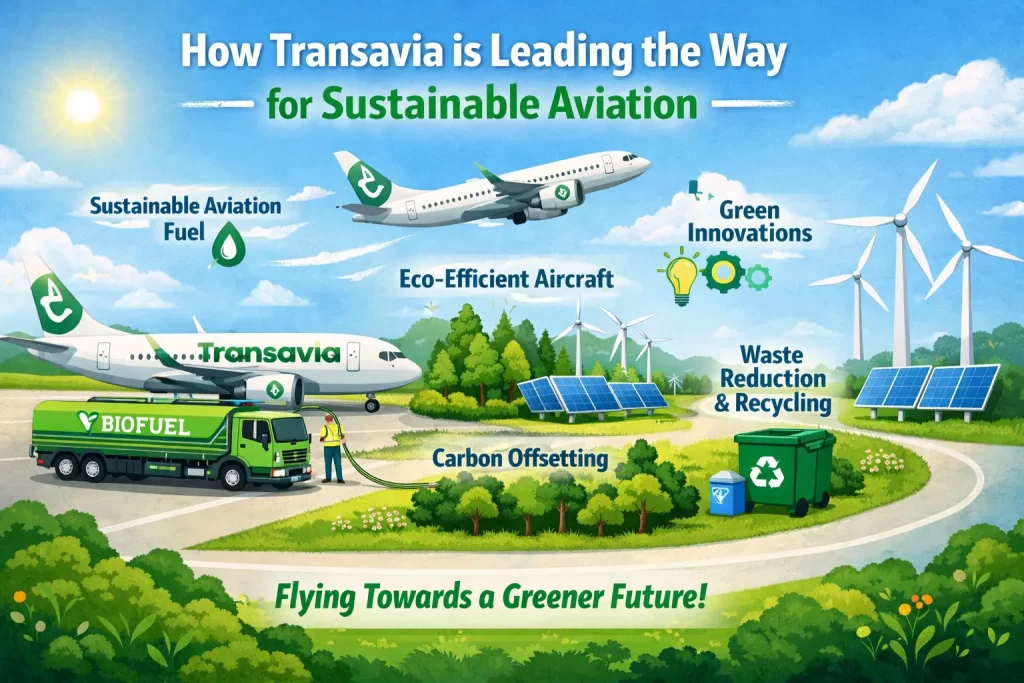
As climate change and sustainability become ever more important to everyday life, the aviation industry faces a unique challenge; how to make flying more sustainable without compromising on accessibility. Flying will always require a carbon footprint, yet Transavia and many other airlines are proving that each flight can be part of the solution instead of the problem.
On this page, we will take you on an adventure through the world of Transavia’s sustainability, why it is important, and what YOU can do to contribute to our vision of having green skies.
Why Sustainability Matters in Aviation?
Flying brings people and cultures together, offering endless possibilities, but it comes with a price tag in terms of the environment. The aviation industry is a significant source of global CO2 emissions, and sustainable aviation is more than a trend; it is a necessity. Transavia does not beat around the bush about the fact that “flying is currently not sustainable.” Instead, it uses this fact as a foundation for finding effective solutions.
Key Pillars of Transavia’s Sustainability Strategy
Transavia’s sustainability initiative is not a one-off project; it is a comprehensive effort that encompasses innovation, smarter operations, passenger engagement, and partnerships.
The key points are as follows:
1. Sustainable Aviation Fuel (SAF): Cleaner Fuel, Lower Emissions
Using Sustainable Aviation Fuel (SAF) is one of the most efficient ways to cut carbon emissions. Transavia mixes SAF with traditional jet fuel to lower CO₂ emissions by a substantial margin.
As of 2025, all flights leaving Europe will contain an average of 2% SAF by law. SAF does not completely remove emissions but cuts CO₂ emissions by at least 65% in its lifecycle compared to fossil fuels.
Tip for travelers: While making a booking, you can make a difference by contributing to SAF, which means you will be helping Transavia to buy more sustainable fuel for their future flights.
2. A New Generation of Aircraft
The older aircraft are heavier, noisier, and less fuel-efficient. This is why Transavia is modernizing its fleet with a new generation of aircraft such as the Airbus A321neo, which are:
- Quieter
- More fuel-efficient
- Emit less CO2 and nitrogen
This is a giant step towards the achievement of the long-term environmental objectives.
3. Innovative Technology for the Future
Transavia doesn’t sit back and hope for improvement, rather they work towards this by partnering with forward-thinking companies through Transavia Ventures who are developing various types of advances such as:
- Noise-reducing technology
- Electric flight possibilities
- Capture of CO₂ from seawater to create a synthetic fuel in the future
- Research associated with sustainable aviation practices
The collaborations will plant the grounds for what could become the ‘norm’ in aviation technologies; flights will be quieter, cleaner, and more environmentally sustainable!
4. Operational Effectiveness and Intelligent Technologies
Little modifications can result in an enormous impact. Transavia deploys intelligent technologies to enhance fuel efficiency throughout the duration of their flights (i.e. Lightweight electronic leather seats, aerodynamic wingtips to minimize drag, and efficacious engine wash procedures) to coordinate fuel consumption and emissions while in flight.
5. Reducing Waste and Recycling on International Flights
As well as reducing the environmental impact of flying by minimizing fuel, Transavia is taking action during flights in order to reduce waste. All onboard waste (plastic, metal, and drink containers) is segregated by Transavia vis-à-vis flights since 2022, leading to a reduction in total waste of 26% since 2022.
2030 Goal is to reduce total waste by 80% from 2022 levels – A big step!
Become Part of the Solution; But How?
Sustainable Travel (Sustained by Air) = Everyone’s Responsibility! You help Airlines Be More Sustainable!
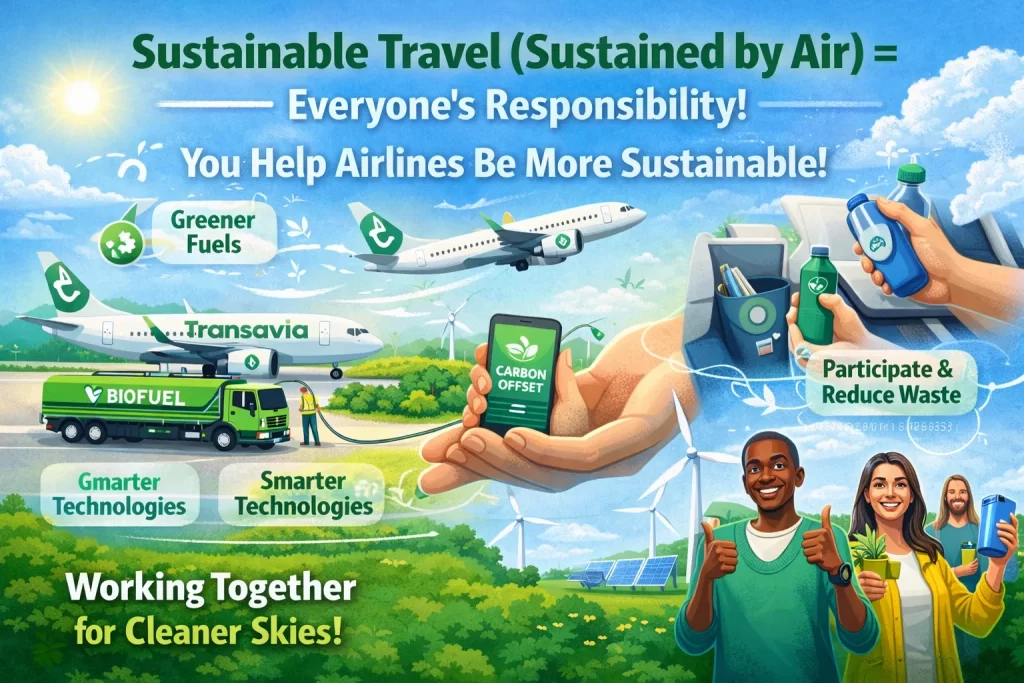
Most effective ways YOU can help:
- Pack Smart, Fly Green!
- Every kg of extra weight on a plane creates more fuel burned
- If every person on every flight loses 2kgs, then millions of kgs of CO₂ can be removed each year.
- Make a SAF Contribution at checkout; every little bit helps to produce greener fuels and create a trend that supports sustainability.
- Share with Others! Use social media to share travel experiences; a little interest can generate a lot.
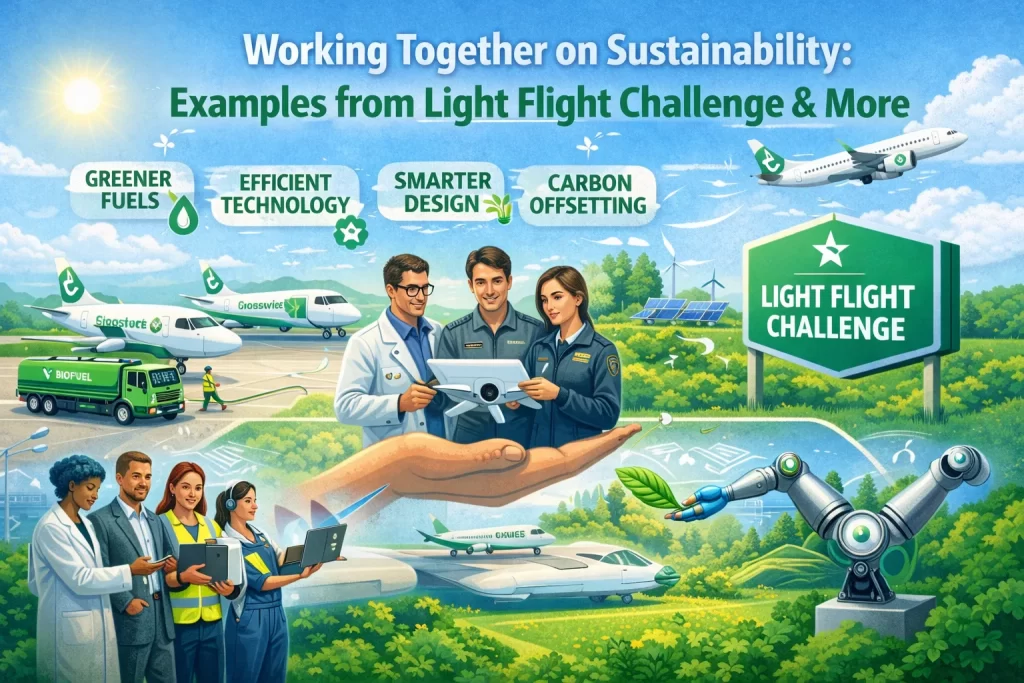
Working Together on Sustainability: Examples from Light Flight Challenge & More
Collaboration is key to sustainability; Transavia is a member of several industry programs, like the SkyTeam Aviation Challenge. This program encourages airlines to run trials of sustainable improvements that deliver real results. One such trial was the Light Flight Challenge, in which airlines revitalized their fleets by working together to reduce the average weight of their planes by 100 kg each, resulting in an estimated savings of over 1.4 million kg of CO2 per year. These projects show that when people work together (employees, passengers, and suppliers), we can achieve our goals.
The Need for Global Attention
Sustainable aviation represents one of the top challenges facing the world today. With the increase in global aviation emissions and the continued expansion of low-cost carriers’ fleets, additional pressure is being placed upon the airline industry to address concerns regarding their impacts on the environment (as well as meet increasing demands for accountability). Independent studies have revealed that airline emissions have dramatically increased over the past few years and have done so primarily as a result of an airline’s rapid growth of its fleet.
In response, Low-Cost Carrier Transavia has been actively working to reduce its environmental impact through innovative approaches to creating transparency in its operations.
The Future of Flying – Together
What does this mean for the future?
- Continued adoption of SAF and scaling
- New generation of aircraft and greener propulsion technologies
- Stronger collaboration throughout the aviation ecosystem
- Meaningful engagement with passengers
Transavia’s sustainability strategy is not one of perfection, rather of making continuous improvements. We move closer with every flight, passenger and innovative development in the creation of a more sustainable aviation experience for future generations.
Final Remark: Start Small → End Large
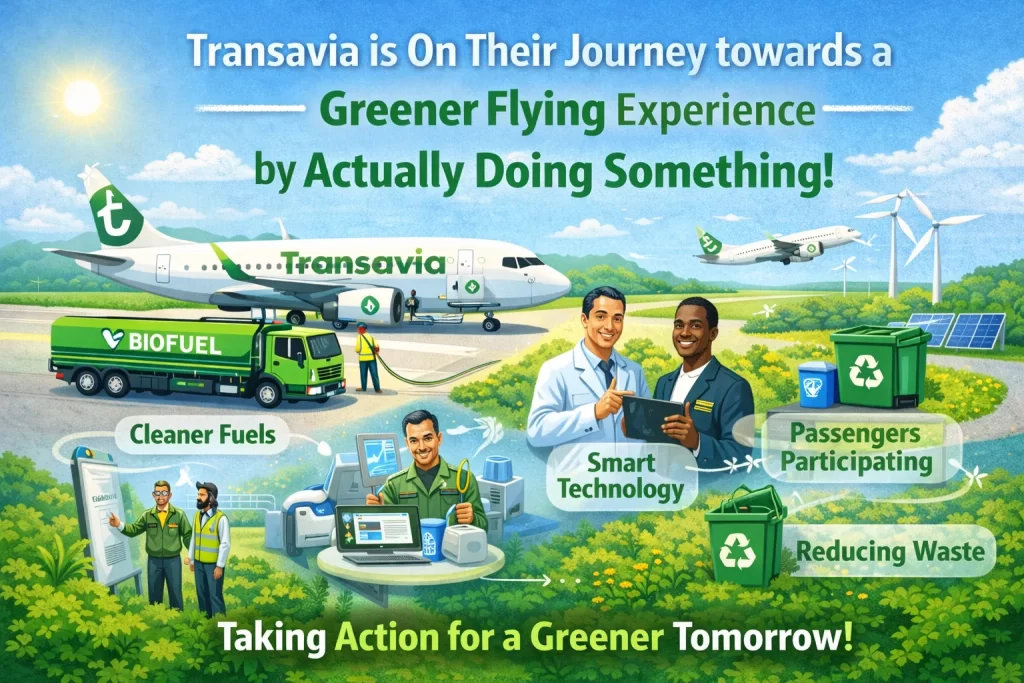
Transavia has started on their journey towards a greener flying experience by actually doing something rather than just talking about it (with cleaner fuel usage, smarter technology, passengers participating and reducing waste). They are charting an environmentally safe course to the future while remembering that they also want to provide travel access for everyone and stewarding our natural world.
Are you ready to fly in a smarter and sustainable way? Together we can have an environmentally friendly solution to flying – one plane at a time.
FAQs
Q1. What are Transavia’s initiatives to lessen its negative effect on the planet?
Ans: Transavia is making efforts to decrease its carbon footprint by purchasing and utilizing Sustainable Aviation Fuel (SAF), renewing its aircraft fleet, decreasing in-flight waste, and developing innovative ideas and new technologies that allow it greater operational efficiency.
Q2. What is Sustainable Aviation Fuel (SAF) and how does it relate to Transavia?
Ans: SAF provides alternative and sustainable sources of jet fuel with reduced CO₂ emissions when compared to traditional jet fuels, offering up to 65% lower CO₂ emissions throughout the fuel’s lifecycle. Transavia uses a combination of SAF and traditional jet fuel to pollute less during its flights. When booking with Transavia, passengers also have the option to donate towards SAF purchases on their flight.
Q3. How can I assist Transavia in its ongoing sustainability initiatives?
Ans: By making an effort to pack lighter for travel, contributing towards SAF purchases at check-out, disposing of all waste during your travels, and promoting awareness of sustainable travel options, you have the ability to make a positive contribution to the planet every time you fly with Transavia.
Q4. Are Transavia’s new airplanes better for the environment?
Ans: Transavia is investing in the Airbus A321neo and other next-generation airplanes that are quieter, lighter, and much more fuel-efficient. These airplanes reduce CO₂ emissions, decrease noise pollution, and lower overall fuel consumption per flight.
Q5. Is flying with Transavia a more sustainable option than other airlines?
Ans: Even though flying is not yet fully sustainable, Transavia’s transparency regarding its impact, along with its investments in sustainable aviation fuels (SAF), innovation, waste reduction, and fleet modernization, makes it the best option for environmentally-conscious travelers.